


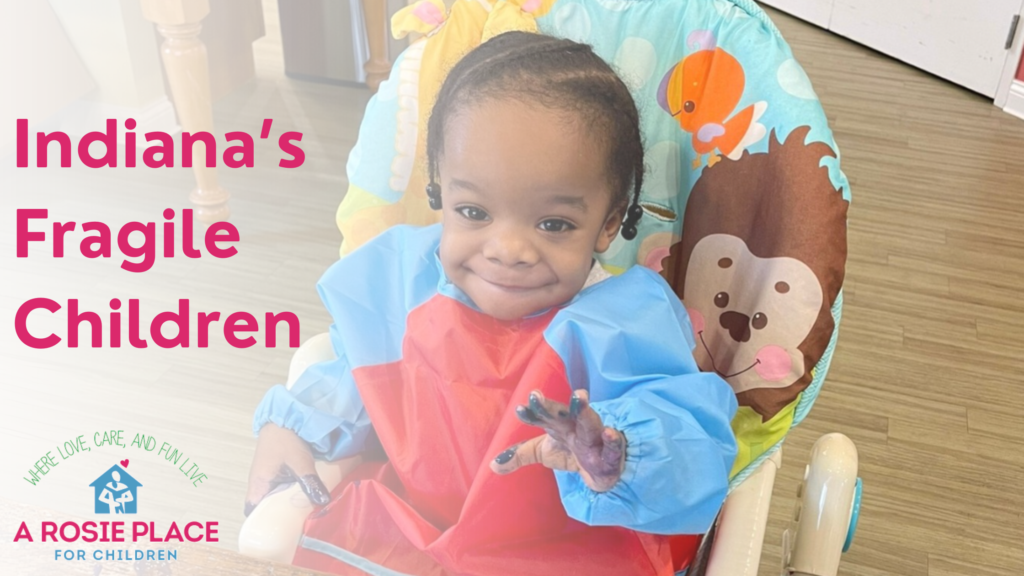
In Indiana, children with special health care needs are a significant group. According to the National Survey of Children’s Health and Indiana’s Title V Maternal/Child Health report, about 20% of Indiana children (roughly 1 in 5) have or are at risk for chronic physical, developmental, behavioral, or emotional conditions requiring health services beyond what most children need. This amounts to over 308,000 children across the state (ages 0–21) as of the late 2010s. This broad figure includes conditions ranging from asthma and ADHD to severe disabilities. Not all of these would be considered “medically fragile,” but it gives a sense of how many children have special health needs.
Focusing on the more medically intensive subset, estimates suggest that approximately 1.5–2% of all children might meet criteria for being medically fragile or complex. National research indicates that about 1.6% of the U.S. pediatric population have medical complexity (roughly 1.2 million children nationwide). In Indiana (with roughly 1.57 million children under 18 in recent years), this percentage would translate to 24,000–30,000 medically fragile children statewide.
It is important to note that precise counts of medically fragile children are not readily available in public health data, because definitions vary and data are often collected through various programs rather than a single registry. However, proxies and program data give insight:
- Medicaid and Special Programs: Indiana’s Medicaid program and related health services track some medically fragile children through specialized waivers and services. For instance, as of late 2023, over 1,600 children in Indiana were receiving “attendant care” supports at home under Medicaid due to their complex medical needs. (This was a sharp increase from just 456 children two years prior, reflecting a rapid growth in families seeking in-home care support.)
- Children’s Special Health Care Services (CSHCS): Indiana’s CSHCS program provides financial assistance and care coordination for children with serious chronic medical conditions. While current enrollment numbers are not published in the sources we reviewed, this program historically serves several thousand children statewide who meet medical and income eligibility.
- Educational Data: Under the Individuals with Disabilities Education Act (IDEA), many medically fragile children receive special education services. Indiana’s Department of Education does not publish a specific “medically fragile” student count, but anecdotal evidence from school nurses and staff suggests increasing numbers of medically fragile students in schools, thanks to medical advances and laws ensuring they can attend.
Definition of “Medically Fragile Children”
There is no single universally accepted definition of “medically fragile children.” Different agencies and experts use similar but not identical criteria. In general, the term refers to children with serious health conditions who require ongoing medical care or specialized support beyond what a typical healthy child would need. Key definitions from various sources include:
- Indiana DCS (Child Welfare) – Medically Fragile: “A child who has a medically diagnosed immunocompromised condition (chronic or acute) or dependence on specialized care or equipment for life or health-sustaining function. Conditions qualifying a child as medically fragile may include cancer, transplant care, and cystic fibrosis”. In other words, children whose health is highly vulnerable without medical support (e.g. feeding tubes, ventilators, or other life-sustaining treatments).
- Healthcare/Education Experts – Children with Special Healthcare Needs: Often defined as those “who require complex health procedures, special therapy or specialized medical equipment/supplies to enhance or sustain their lives”. This broad category includes medically fragile children. For example, the American Academy of Pediatrics notes that children with medical complexity typically have “medical fragility and intensive care needs… congenital or acquired multisystem disease, severe neurologic conditions with marked functional impairment, and/or technology dependence for activities of daily living”. In practical terms, medically fragile children may rely on devices like ventilators or feeding tubes, require frequent hospitalizations or specialist care, or have chronic conditions that significantly impair daily functioning.
- Medically Fragile vs. Medically Complex – These terms are often used interchangeably. One distinction given by pediatric care organizations is that a medically fragile child might have a single serious condition, whereas medically complex children usually have multiple chronic conditions. Both require constant monitoring and care. For example, a child dependent on a ventilator due to one condition (like a neuromuscular disease) is medically fragile; a child with that condition and other disorders would be considered medically complex. In all cases, these children depend on medical support to survive or thrive.
Common examples of medically fragile children include those with severe genetic or chronic disorders (e.g. cystic fibrosis, certain forms of cerebral palsy, advanced congenital heart disease), children who are technology-dependent (on tracheostomy ventilators, dialysis, etc.), those with organ transplants, and other serious health conditions. Many are also classified under “children with special health care needs” (CSHCN), though CSHCN is a broader category that can include behavioral or developmental needs. Medically fragile children represent a subset of CSHCN that have life-threatening or highly complex medical conditions requiring ongoing clinical care.
Six-County Region: St. Joseph, Elkhart, LaPorte, Kosciusko, Starke, Marshall
| County | Total Children (0–17) | Est. # with Special Health Needs | Est. # Medically Fragile |
| St. Joseph | 63,119 | ~12,600 | ~1,000–1,200 |
| Elkhart | 55,809 | ~11,160 | ~890–1,100 |
| LaPorte | 23,540 | ~4,700 | ~350–470 |
| Kosciusko | 18,736 | ~3,750 | ~300–375 |
| Starke | 5,156 | ~1,030 | ~80–100 |
| Marshall | 11,177 | ~2,235 | ~170–220 |
| Six-County Total | 177,537 | ~35,475 | ~2,800–3,465 |
| Indiana (State) | ~1,580,000 | ~314,000 | ~25,000–30,000 |
Northern Indiana Region: Estimated Counts by County
| County | Total Children (0–17) | Est. with SHCN (~20%) | Est. Medically Fragile (1.5%–2%) |
| Lake | 115,228 | 23,046 | 1,728–2,305 |
| Porter | 37,847 | 7,569 | 568–757 |
| Pulaski | 2,477 | 495 | 37–50 |
| Fulton | 4,071 | 814 | 61–81 |
| Noble | 10,432 | 2,086 | 156–209 |
| Whitley | 7,196 | 1,439 | 108–144 |
| Allen | 99,640 | 19,928 | 1,495–1,993 |
| Cass | 7,533 | 1,507 | 113–151 |
| White | 4,000 | 800 | 60–80 |
| Carroll | 3,000 | 600 | 45–60 |
| Tippecanoe | 27,000 | 5,400 | 405–540 |
Note: The total child population figures are approximations based on the most recent data available.
Data Sources and Agency Roles
- Indiana Department of Health (IDOH)
- Indiana Family and Social Services Administration (FSSA)
- Local Health Systems and Schools
- National Sources (CDC, MCHB)
Trends Over Time
- Growth in Population: The population of medically fragile children has increased.
- Shift to Home and Community Care: Supported by Medicaid waivers and facilities like A Rosie Place.
- Educational Inclusion: More medically fragile students are attending school.
- Resource Distribution: Regional networks are forming around pediatric specialty care.
Conclusion
Medically fragile children – those with chronic, serious health conditions or technology dependencies – make up a small but significant portion of the pediatric population in Indiana. In the six-county area of St. Joseph, Elkhart, LaPorte, Kosciusko, Starke, and Marshall 2,800–3,465 children can be considered medically fragile, and around 35,000 have special health care needs broadly. Statewide, roughly 25–30 thousand children are medically fragile by the most stringent definitions, and over 300 thousand have some special health need.
All sources agree on the importance of clear definitions and data to plan services. While exact counts per county are hard to pin down, the estimates and trends above give a picture of the scope. The number of medically fragile children is growing over time, due to better survival rates and a commitment to community-based care. Indiana’s experience reflects national patterns: more children with complex needs are thriving in home and school settings, with public agencies adapting to ensure these vulnerable children and their families get the support they require.
Sources:
- U.S. Census Bureau QuickFacts: Provided total population estimates for each county.
- Indiana Department of Health: Offered insights into the percentage of children with special health care needs.
- Health Resources and Services Administration (HRSA): Supplied national estimates for children with medical complexity
- American Academy of Pediatrics. (2018). Children with medical complexity. Pediatrics, 141(6), e20180509. https://doi.org/10.1542/peds.2018-0509
- Centers for Disease Control and Prevention. (2023). Children with special healthcare needs in disasters. Retrieved from https://www.cdc.gov/childrenindisasters/children.html
- Children’s Hospital Association. (2020). Care coordination for children with medical complexity. Retrieved from https://www.childrenshospitals.org
- Family Voices Indiana. (2022). Complex Care Coordination Collaborative (4C) outcomes and learnings. Retrieved from https://www.familyvoicesindiana.org
- Health Resources and Services Administration. (2022). National Survey of Children’s Health (NSCH) 2020–2021 Data Brief. Maternal and Child Health Bureau. Retrieved from https://mchb.hrsa.gov/data/national-surveys
- Indiana Department of Education. (n.d.). Special education and Individuals with Disabilities Education Act (IDEA) reporting. Retrieved from https://www.in.gov/doe/
- Indiana Department of Health. (2021). Title V Maternal and Child Health Needs Assessment. Retrieved from https://www.in.gov/health/mch/
- Indiana Family and Social Services Administration. (2023). Medicaid Advisory Committee: Children with medical complexity and attendant care program updates. Retrieved from https://www.in.gov/fssa/
- Indiana Family and Social Services Administration, Division of Disability and Rehabilitative Services. (2024). Attendant care services for medically fragile children policy manual. Retrieved from https://www.in.gov/fssa/ddrs/
- A Rosie Place for Children. (n.d.). Providing respite for medically fragile children. Retrieved from https://arosieplace.org
- U.S. Census Bureau. (2023). County population totals: Annual estimates for resident population by age and sex. Retrieved from https://data.census.gov
- Kuo, D. Z., Houtrow, A. J., Arango, P., Kuhlthau, K. A., Simmons, J. M., & Neff, J. M. (2012). Family-centered care: Current applications and future directions in pediatric health care. Maternal and Child Health Journal, 16(2), 297–305. https://doi.org/10.1007/s10995-011-0751-7
- Cohen, E., Kuo, D. Z., Agrawal, R., Berry, J. G., & Casey, P. H. (2011). Children with medical complexity: An emerging population for clinical and research initiatives. Pediatrics, 127(3), 529–538. https://doi.org/10.1542/peds.2010-0910
- Berry, J. G., Hall, D. E., Kuo, D. Z., Cohen, E., Agrawal, R., Feudtner, C. (2011). Hospital utilization and characteristics of patients experiencing recurrent readmissions within children’s hospitals. JAMA, 305(7), 682–690. https://doi.org/10.1001/jama.2011.122
Notes:
- Some general information (like historical trends about medically fragile children and growth in public schools) was based on secondary sources summarized in publications like Pediatrics and Maternal and Child Health Journal.